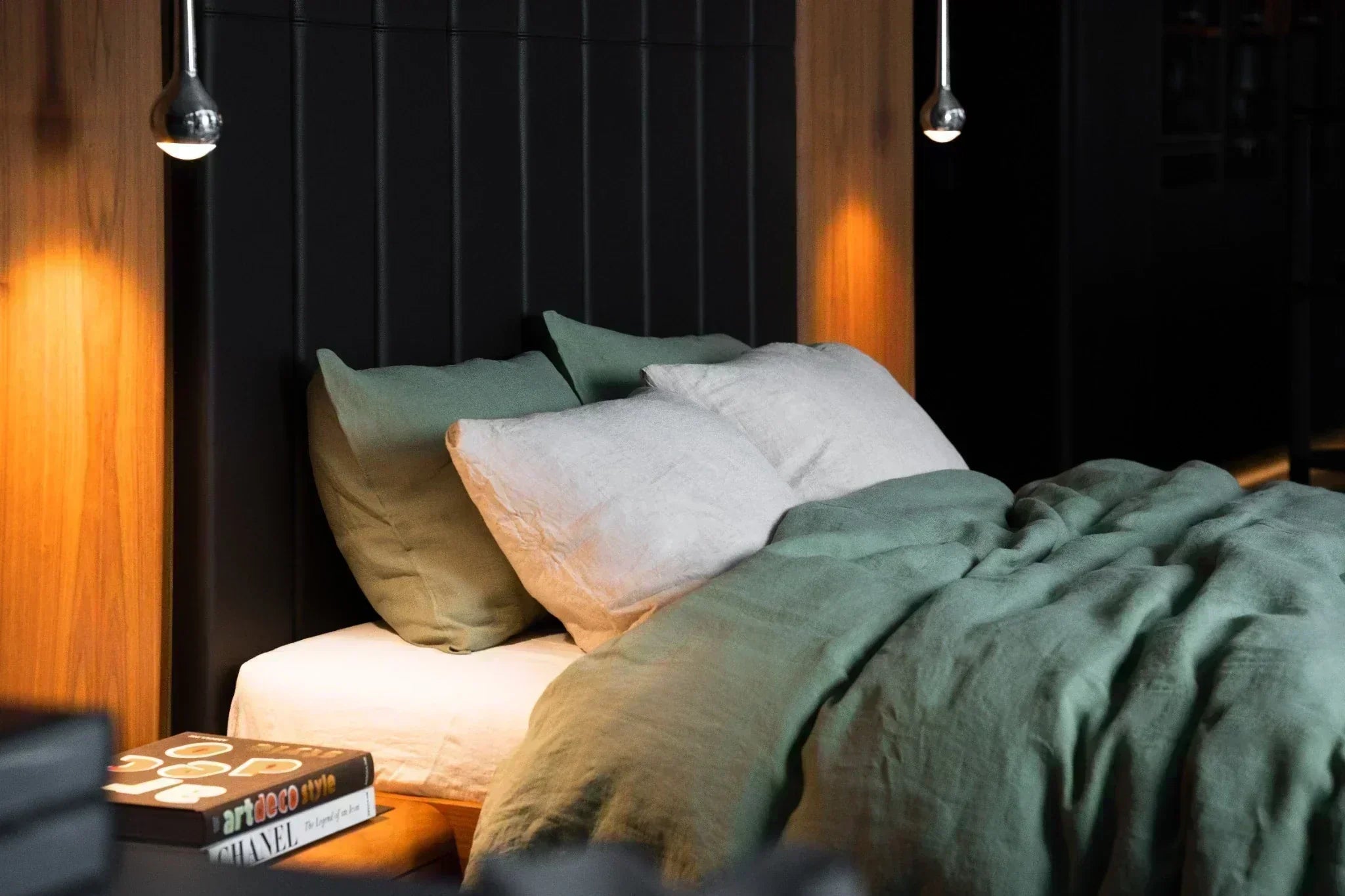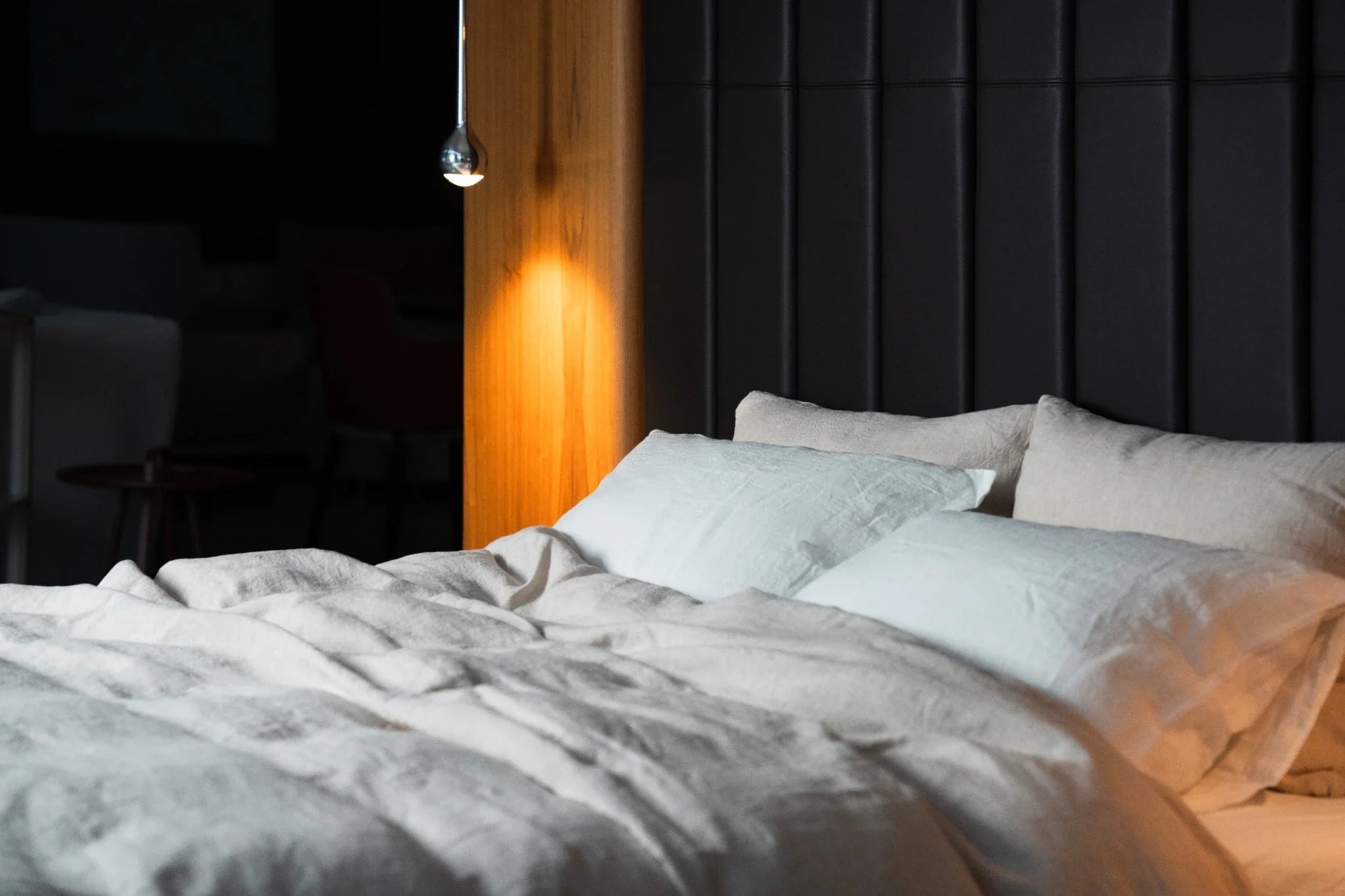
Walk into any home goods store and you'll find bedding labelled "linen." The word has become almost generic — a shorthand for anything with a slightly textured weave or a natural appearance. But real linen, made from European flax by weavers with centuries of inherited craft, is a fundamentally different product from what most people think of when they hear the word.
The difference starts in the soil. It continues through the growing conditions, the retting process, the weaving tradition, and the finishing. By the time a piece of Lithuanian linen reaches you, it has passed through a chain of quality that most "linen" products never come close to. Here's what that actually means — and why it matters for how you sleep.
It Starts With the Flax
Linen comes from flax — a tall, delicate plant that's more demanding to grow than cotton. Flax is sensitive to soil composition, rainfall patterns, temperature variation, and sunlight. Grow it in the wrong conditions and the fibers are weak, coarse, and inconsistent. Grow it in the right conditions and the fibers are long, strong, smooth, and uniform — the foundation of genuinely fine linen.
The Baltic region — Lithuania, Latvia, and parts of northern Poland and Belgium — produces what is widely considered the highest quality flax in the world. The combination of the Baltic climate (cool summers, consistent rainfall, long growing days) and the region's naturally mineral-rich soils creates growing conditions that are difficult to replicate elsewhere.
|
500+
Years of linen weaving
tradition in Lithuania |
3×
More breathable
than cotton |
15–20
Year lifespan
with proper care |
This isn't marketing language — it's agricultural reality. European flax grown under the EUROPEAN FLAX certification is traceable from seed to fabric, grown without irrigation (relying entirely on natural rainfall), and produced without GMOs. The certification exists specifically because the origin of flax makes a measurable difference to fiber quality.
Lithuania's Weaving Tradition
Growing quality flax is necessary but not sufficient. The fiber has to be processed and woven by people who understand it — and that's where Lithuania's 500-year tradition of linen craftsmanship becomes relevant.
Linen weaving has been central to Lithuanian culture since at least the 15th century. UNESCO has recognized Lithuanian linen weaving as part of the Intangible Cultural Heritage of Humanity. This isn't ceremonial recognition — it reflects the fact that linen craft has been continuously practiced, refined, and transmitted across generations in a way that doesn't exist in most other countries.
The practical result of this tradition is a manufacturing infrastructure — mills, weavers, finishing facilities — that has been optimizing specifically for linen for hundreds of years. These aren't factories that switched from cotton to linen when demand shifted. They were built for linen and they've been doing nothing else since before most modern countries existed.
"Lithuania has been weaving linen for over 500 years. That's not a marketing story — it's why the craft knowledge exists that most manufacturers simply don't have." |
What "Regular Linen" Actually Is
The linen market has expanded significantly as consumers have become interested in natural fabrics. With that growth has come a large amount of linen — particularly from Asia — that bears the name but not the quality.
There are several ways linen quality can be compromised without it being obvious from the label:
| ● | Flax grown in the wrong climate produces shorter, weaker fibers — resulting in a rougher, less durable fabric regardless of how it's marketed |
| ● | "Linen blend" products mix flax with cotton or polyester, which improves softness initially but significantly reduces the thermal properties that make linen worth switching to |
| ● | Some manufacturers use chemical treatments to make linen feel soft immediately — these wash out after a few cycles, leaving you with the underlying fabric quality |
| ● | Thin linen under 140 g/m² cuts production cost but compromises both durability and the substantial feel that quality linen should have |
| ● | Linen that hasn't been stonewashed will be stiff and require many washes to break in — a poor first experience that's responsible for the "linen is scratchy" reputation |
How to Tell the Difference
When you're evaluating linen bedding, there are a few specific indicators worth looking for — beyond the word "linen" on the label.
EUROPEAN FLAX certification
This certification verifies that the flax was grown in Europe (typically France, Belgium, or the Baltic states), without irrigation, without GMOs, and with full traceability from field to fabric. It's the most reliable indicator of flax origin quality available to consumers.
OEKO-TEX Standard 100
This certification means the finished fabric has been tested for over 100 harmful substances and verified safe for direct skin contact. For bedding — something you're in contact with for 7–8 hours every night — this matters more than most people realize.
Stonewashed finish
Genuine stonewashing (as opposed to enzyme washing or chemical softening) produces a specific texture and drape that holds up after washing. If a linen product doesn't specify stonewashed, ask.
Weight (g/m²)
A weight of 155–165 g/m² is the sweet spot for bedding linen. Lighter than this starts to feel insubstantial; heavier starts to affect breathability. If a product doesn't list its weight, that's worth questioning.
| ● | 100% linen (not "linen blend" or "linen-look") |
| ● | EUROPEAN FLAX certified — traceable Baltic or Western European origin |
| ● | OEKO-TEX Standard 100 — tested safe for skin contact |
| ● | Stonewashed — soft from night one, texture that holds after washing |
| ● | 160 g/m² weight — premium without sacrificing breathability |
| ● | Made in Lithuania, Belgium, or France — weaving tradition that matters |
Why This Matters for Sleep Specifically
The thermal properties that make linen effective for hot sleepers — the hollow fiber structure, the breathability, the moisture-wicking — depend entirely on the quality of the underlying fiber. Compromised flax or blended fabric means compromised thermal performance.
When you buy linen bedding from a manufacturer using properly sourced Lithuanian or Baltic flax, woven by mills with genuine craft tradition, you're getting the full benefit that linen can offer. When you buy "linen" from a manufacturer using compromised sourcing, you may get some improvement over cotton — but nothing close to what linen is actually capable of.
The thermal difference between high-quality European linen and cheap "linen" bedding is meaningful. If you've tried linen before and found it didn't make a noticeable difference to your sleep temperature, source quality is likely the explanation.
"If linen didn't change how you sleep, it probably wasn't real linen. Origin and craft process determine whether you get the thermal properties — or just the aesthetic." |

The Nommar Approach
Nommar was built around one specific decision: source only Lithuanian linen, from mills that have been weaving it for generations, and be transparent about every step of the process.
The flax is EUROPEAN FLAX certified — grown in the Baltic region under the conditions that have made Lithuanian linen the reference standard for quality. The finished fabric is OEKO-TEX certified. Every set is stonewashed before it leaves the mill, so it's soft from the first night. The weight is 160 g/m² — deliberate, not arbitrary.
This isn't a luxury positioning exercise. It's the practical result of building a product around the question: what actually needs to be true for this to work for hot sleepers? The answer pointed consistently back to origin, craft, and process — things that are invisible on most labels but determine everything about how the product performs.
A Note on Price
Lithuanian linen costs more to produce than linen made from lower-quality sourcing. The flax costs more. The mills cost more. The certifications cost more. This is real, and it's reflected in the price of a Nommar set.
The question worth asking isn't whether premium linen is expensive — it is. The question is whether the difference in sleep quality justifies the difference in cost. For hot sleepers who have spent years waking up tired despite technically sleeping enough, the answer is usually straightforward.
A duvet cover set that lasts 15–20 years and genuinely improves the quality of one third of your life costs differently than a $60 cotton set that needs replacing every few years and never solves the underlying problem.