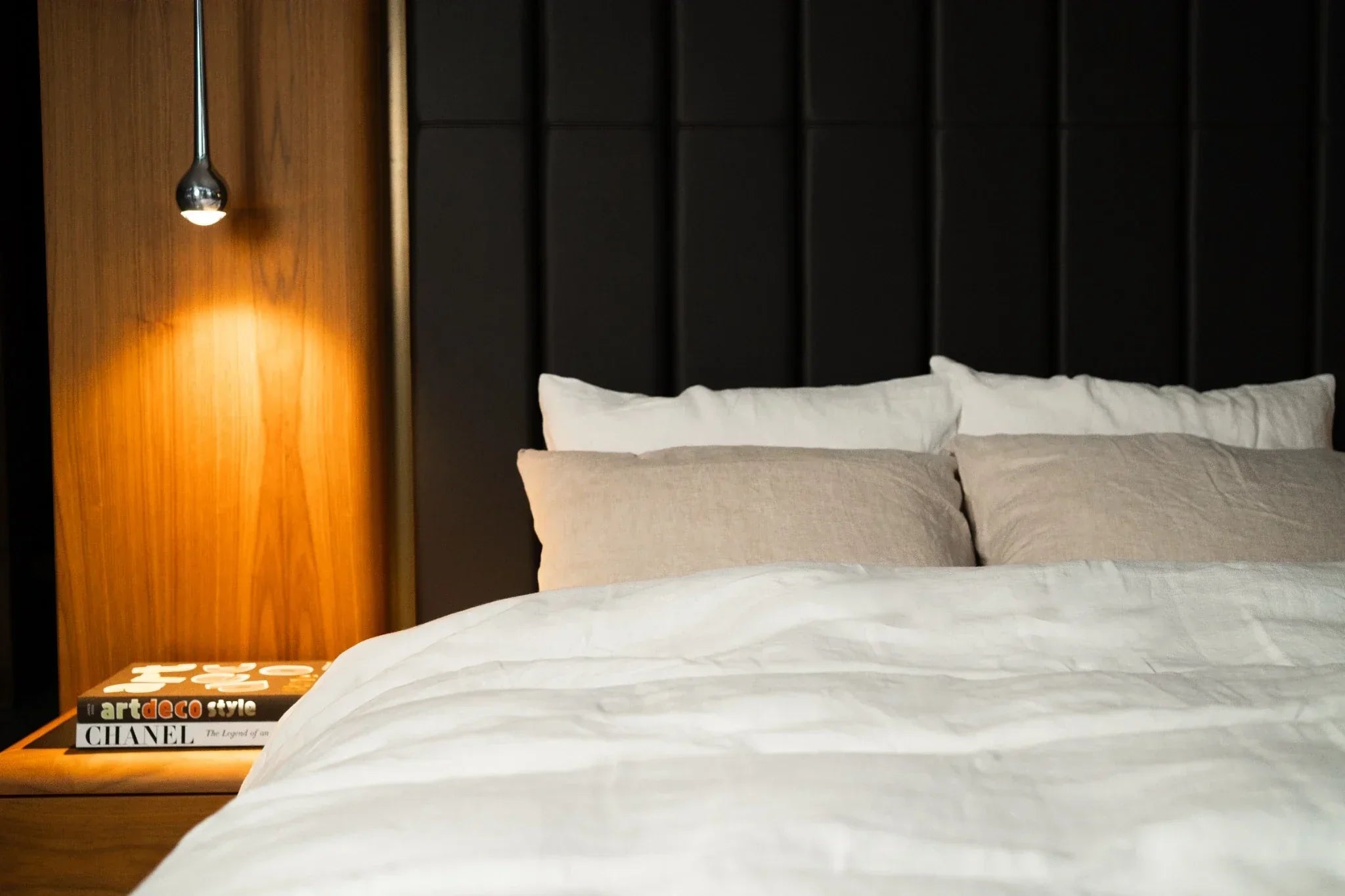
Most people trying to improve their sleep focus on the obvious things — no screens before bed, cutting caffeine, keeping a consistent schedule. Good advice. But there's a variable almost everyone ignores: what they're sleeping under.
Your bedding is in contact with your body for 7–8 hours every night. It regulates your temperature, wicks moisture, and either supports or disrupts the natural processes your body runs during deep sleep. That's not a marketing claim — it's physiology. And it's worth understanding.
First, understand what deep sleep actually is
Your brain does its most important work while you sleep
Sleep isn't a single state. It cycles through four distinct stages roughly every 90 minutes, and not all stages are equal. Deep sleep — also called slow-wave sleep or N3 — is the one that matters most for physical recovery, immune function, and memory consolidation.
|
Stage 1
Light
Transition to sleep. Easy to wake from. A few minutes. |
Stage 2
Light
Heart rate slows, body temp drops. Lasts longest overall. |
Stage 3
Deep
Slow-wave sleep. HGH release, cellular repair, memory consolidation. |
Stage 4
REM
Dreaming, emotional processing, creativity. Increases toward morning. |
Deep sleep is concentrated in the first half of the night. Miss it — or have it interrupted — and no amount of extra hours in bed fully compensates. You wake up tired even after 8 hours. Sound familiar?
"Deep sleep is when the body repairs tissue, consolidates memory, and resets the systems that regulate mood and energy the next day. It's not optional. It's the whole point."
The temperature connection
Your body needs to cool down to fall into deep sleep
Here's the mechanism most people don't know: your core body temperature must drop by approximately 1–2°C to initiate and sustain deep sleep. This isn't preference — it's a hard biological requirement. The hypothalamus orchestrates this cooling process every night, and anything that interferes with it delays or fragments deep sleep.
Core temp drops 1–2°C as you enter deep sleep
The body achieves this by vasodilating — pushing warm blood toward the skin's surface to radiate heat outward. Your bedding either helps this process by allowing that heat to escape, or it traps it and forces your body to work harder — waking you partially, or pushing you into lighter sleep stages.
This is why hot sleepers — people who naturally run warm, sleep restlessly, or wake up in the night — often feel better the next day when they solve the temperature problem first. Not a new mattress. Not melatonin. Just cooler sleeping conditions.
The fabric question
What your bedding is made of determines how well it manages heat
Not all fabrics behave the same way in bed. The differences in breathability, moisture management, and thermal regulation are significant — and they're the difference between sleeping through the night and waking up at 3am overheated.
| Property | Cotton | Linen |
|---|---|---|
| Breathability | Moderate — traps some air, builds heat under covers | High — hollow fiber structure allows airflow through the fabric |
| Moisture absorption | Absorbs well but holds moisture against skin | Absorbs up to 20% of its weight, releases quickly into air |
| Heat retention | Retains heat, especially in higher thread counts | Naturally thermoregulating — warm in winter, cool in summer |
| Surface feel when warm | Clammy, heavy as moisture accumulates | Stays dry and cool to the touch |
High thread count cotton — often marketed as "luxury" — is actually one of the worst choices for hot sleepers. The tighter weave blocks airflow and traps moisture. The result is a microclimate under your covers that steadily rises in temperature as the night goes on.
Why linen specifically
Linen has been used as bedding for thousands of years for good reason
Linen is made from flax — one of the oldest cultivated plants in the world. Its fiber structure is fundamentally different from cotton. The hollow core of each flax fiber acts like a tiny thermal buffer, moderating temperature in both directions: cool in summer, warm enough in winter. It's the reason linen has been the preferred bedding material in warm climates for centuries.
Stonewashed linen — which is what Nommar uses — goes through a mechanical softening process that removes the initial stiffness associated with raw linen. The result is fabric that feels broken-in and soft immediately, while retaining all the thermal and moisture-wicking properties that make linen exceptional for sleep.
Practical checklist
What to look for if you want bedding that actually supports deep sleep
- Natural fiber — linen or high-quality cotton (avoid synthetic blends, which trap heat and static)
- Loose weave — more airflow means better temperature regulation. Avoid high thread count marketing
- Moisture-wicking — fabric should pull sweat away from the body, not hold it
- Thermoregulating — ideally works in both directions: cooling when warm, warming when cool
- OEKO-TEX or European Flax certified — confirms no chemical residues that can irritate skin or disrupt sleep
- Stonewashed or pre-washed — softness from the first night, no breaking-in period
The bottom line
Small environmental changes can have outsized effects on sleep quality
You can do everything right — dark room, cool air, consistent bedtime — and still have poor sleep quality if your bedding is working against your body's thermal regulation. The microclimate between your body and your covers is something you control.
This isn't about spending more on bedding for its own sake. It's about understanding that the material in contact with your skin for 7–8 hours every night either supports or undermines the biological processes that make sleep restorative. Once you understand the mechanism, the material choice becomes obvious.
If you wake up tired despite enough hours of sleep, start with temperature. It's usually the first variable worth fixing — and often the most overlooked.
Frequently asked questions
Common questions about bedding and sleep quality
Can bedding really affect sleep quality?
Yes. Bedding directly affects your body's ability to regulate temperature during sleep — and core temperature drop is a biological requirement for entering deep sleep. Bedding that traps heat or retains moisture can fragment sleep cycles, reduce time in slow-wave sleep, and cause early waking. It's one of the most overlooked variables in sleep quality.
What fabric is best for deep sleep?
Linen is widely considered the best fabric for sleep quality, particularly for people who sleep warm. Its hollow fiber structure allows airflow through the fabric, it absorbs up to 20% of its weight in moisture before feeling damp, and it naturally thermoregulates — cooling when warm, warming when cool. High-quality cotton can work well too, but avoid high thread counts, which restrict airflow.
Why do I wake up hot in the middle of the night?
Waking up hot is usually a sign that your bedding is trapping heat instead of releasing it. As your body temperature naturally rises toward the second half of the night, breathable bedding allows that heat to dissipate. Non-breathable fabrics — particularly synthetic blends or dense cotton — create a heat buildup under the covers that eventually wakes you. Switching to linen or a more breathable fabric resolves this for most people.
Is linen bedding good for hot sleepers?
Linen is one of the best choices specifically for hot sleepers. It is approximately three times more breathable than standard cotton, wicks moisture away from skin quickly, and stays cool to the touch throughout the night. Stonewashed linen — which has been mechanically softened — also removes the initial stiffness some people associate with raw linen, making it comfortable from the first night.
Does thread count matter for sleep quality?
High thread count is a marketing metric, not a quality one — and for sleep quality, it can actually work against you. Higher thread counts mean a tighter weave, which restricts airflow and traps heat. For better sleep, a looser weave in a breathable natural fiber like linen or lower thread count cotton is more beneficial than the "luxury" 1000-thread-count sheets commonly advertised.
How long does it take to notice a difference after switching to linen bedding?
Most people notice a difference within the first week, particularly if they previously slept warm. The most common reports are falling asleep faster, waking up less during the night, and waking up less sweaty. Sleep tracking devices like Whoop or Oura typically show measurable improvements in deep sleep percentage within 1–2 weeks of switching to more breathable bedding.
Made for people who take sleep seriously
Stonewashed Lithuanian linen, OEKO-TEX certified, designed to support the natural temperature drop your body needs for deep sleep.
Read the full story